
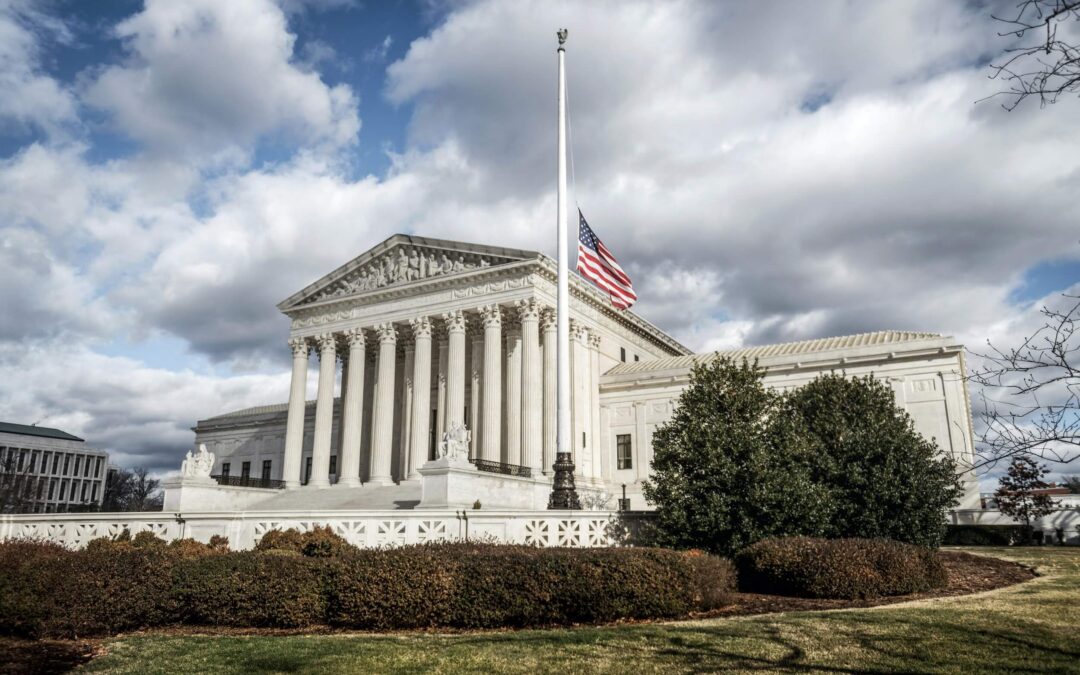
The U.S. Supreme Court recently issued a unanimous decision in Urias-Orellana v. Bondi that significantly reshapes how courts review asylum-based persecution findings. The ruling clarifies that federal courts must apply a highly deferential standard when reviewing these determinations.
This change directly affects asylum and removal defense cases. It limits how much appellate courts can second-guess immigration judges. It also shifts more responsibility to the trial-level record.
You can read the court filing here:
Supreme Court Asylum Decision Filing
Supreme Court Clarifies the Standard for Persecution Findings
The Court ruled that the “substantial evidence” standard applies to all parts of a persecution determination. This includes both factual findings and the legal conclusion about whether those facts amount to persecution.
Justice Ketanji Brown Jackson wrote the opinion. The Court resolved a split among federal circuit courts on this issue.
Under this ruling, courts of appeals must defer to immigration judges unless the record compels a different result.
That means a court cannot replace the agency’s judgment with its own interpretation of the facts.
How the Case Began
The case involved a family from El Salvador who entered the United States in 2021. They sought asylum based on repeated threats from a hired attacker.
The immigration judge believed their testimony. The judge accepted that threats and killings occurred.
However, the judge still denied asylum. The judge found that the harm did not legally qualify as persecution under the Immigration and Nationality Act.
The Board of Immigration Appeals upheld that decision. The First Circuit later affirmed it as well.
Why the Supreme Court Got Involved
Federal courts had applied different standards when reviewing persecution findings. Some used de novo review. Others applied substantial evidence review.
De novo review allows courts to re-evaluate legal conclusions without deference. Substantial evidence review requires courts to uphold agency decisions unless no reasonable judge could agree with them.
The Supreme Court stepped in to resolve this inconsistency across the country.
It chose the deferential standard and made it binding nationwide.
What the Court Decided
The Court relied on Section 1252(b)(4)(B) of the Immigration and Nationality Act. That provision requires courts to treat agency factual findings as conclusive unless the evidence demands a different result.
The Court held that this rule applies to the entire persecution analysis, including mixed questions of law and fact.
The Court also rejected arguments that recent precedent eliminating Chevron deference required a different result.
Because Congress already set a deferential standard in the statute, courts must follow it.
What This Means for Appeals
Federal appellate courts now have limited authority to overturn persecution findings.
A court cannot reweigh testimony or reinterpret facts. It can only reverse if no reasonable fact-finder could agree with the agency.
This makes immigration judges’ decisions far more difficult to challenge on appeal.
Even strong factual narratives may not succeed if the legal threshold is not clearly met in the record.
Impact on Asylum Practitioners
This ruling changes how attorneys must prepare asylum cases. The immigration court hearing now carries even greater weight.
Arguments that rely on appellate correction will carry less force under this standard.
Instead, the focus must shift to building a strong, complete evidentiary record early in the case.
Once the immigration judge rules, appellate courts will rarely disturb that decision.
Building a Stronger Asylum Record
To meet the persecution standard, applicants must show harm that goes beyond harassment or threats. The harm must connect to a protected ground such as race, religion, nationality, political opinion, or membership in a particular social group.
After this ruling, credibility alone may not be enough in many cases.
Corroborating evidence becomes essential whenever it is available. Medical records, psychological evaluations, and expert reports can strengthen claims significantly.
Country condition evidence should also be specific. General reports are less persuasive than documentation tied to the applicant’s exact circumstances.
Attorneys must also clearly define particular social groups early in the case. Issues not raised before the immigration judge may be lost on appeal.
Why This Decision Matters
The Supreme Court’s ruling creates a uniform national standard for reviewing asylum persecution claims.
It reduces inconsistent outcomes between federal circuits.
It also reinforces the immigration judge’s role as the primary decision-maker in asylum cases.
For many applicants, the immigration court hearing is now the most important stage of the process.
Speak With an Immigration Attorney
If you are pursuing asylum or preparing for an immigration court hearing, your case strategy matters more than ever under this new standard.
Call (818) 900-5707 to speak with an immigration attorney today.
We can help you evaluate your case, build a strong record, and prepare for both trial and appeal under current asylum law standards.

